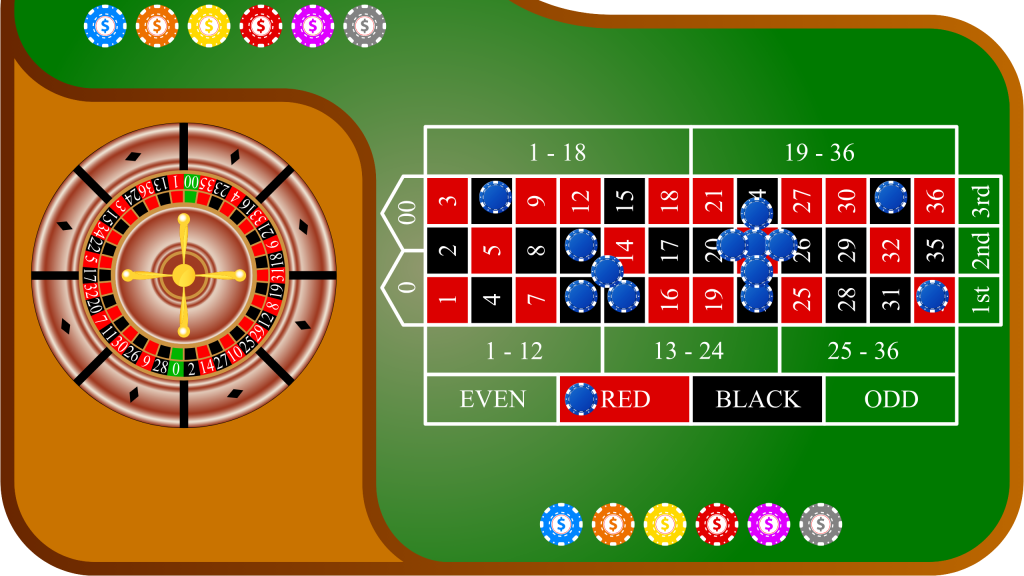
European roulette features a house edge of 2.7 percent while American roulette reaches 5.26 percent due to the additional double zero pocket, making strategy selection and betting discipline critical factors that separate consistent players from casual gamblers.
Roulette Fundamentals and Game Mechanics
Roulette operates on a simple mechanical principle where a spinning wheel contains numbered pockets and a ball determines the winning number through random physics. The game divides into inside bets placed on specific numbers or small number groups and outside bets covering larger sections like red or black, odd or even, or dozens. Betify Casino and similar modern platforms offer both European and American variants with digital wheels that maintain identical probability mechanics to physical casinos.
The critical distinction between game variants affects your mathematical expectations. European wheels contain 37 pockets numbered 0 through 36, while American wheels add a 00 pocket for 38 total positions. This single additional pocket increases the house advantage by approximately 2.56 percentage points, meaning European roulette provides objectively better odds regardless of betting strategy applied.
Successful roulette players recognize that no betting system eliminates the house edge, yet proper bankroll management and strategic bet selection optimize winning potential within games where mathematics favors the house permanently. Understanding this reality separates informed players from those pursuing unrealistic gambling systems.
Inside and Outside Bets Explained
Inside bets target specific numbers or small combinations with lower hit frequency but higher payouts. Outside bets cover broader number ranges with frequent wins but lower rewards. The following breakdown clarifies each bet category and its operational mechanics:
- Straight bets place chips on single numbers, paying 35 to 1
- Split bets cover two adjacent numbers, paying 17 to 1
- Street bets span three consecutive numbers, paying 11 to 1
- Corner bets cover four numbers in a square formation, paying 8 to 1
- Line bets include six consecutive numbers, paying 5 to 1
- Red or black bets cover 18 numbers each, paying 1 to 1
- Odd or even bets include 18 numbers respectively, paying 1 to 1
- Dozen bets cover 12 consecutive numbers, paying 2 to 1
Outside bets provide consistent small wins that maintain bankroll stability, while inside bets offer occasional substantial payouts. Strategic players combine both categories to balance risk and reward across extended gaming sessions.
Practical Betting Systems and Their Real Mechanics
Multiple betting systems attempt to manage money and improve winning consistency through mathematical progressions. These systems do not change game odds but modify bet sizes according to win-loss patterns, requiring clear understanding of their mechanics and inherent limitations.
Martingale System
The Martingale strategy doubles bet size after each loss, theoretically recovering losses through a single win. A player betting 10 units loses, then bets 20 units, then 40 units, continuing until winning. The winning bet compensates all previous losses and generates profit equal to the initial bet amount.
This system fails during extended losing streaks that exceed available bankroll. If losses reach seven consecutive times starting from 10 units, the eighth bet requires 1280 units, exceeding most player budgets and hitting table maximum limits implemented by all casinos to prevent this exact strategy.
Fibonacci Sequence Approach
Fibonacci betting follows the mathematical sequence 1, 1, 2, 3, 5, 8, 13, 21, 34, 55 where each number equals the sum of two preceding numbers. Players advance one step forward after losses and two steps backward after wins, creating a gentler progression than Martingale while maintaining loss recovery mechanics.
This system requires less capital than Martingale but still fails during prolonged losing streaks. The slower progression extends gameplay duration but does not eliminate mathematical disadvantage inherent in roulette games.
D’Alembert System
D’Alembert increases bets by one unit after losses and decreases by one unit after wins, creating balanced progression. Starting with 10-unit bets, a player loses and bets 11 units next, then bets 12 units, etc. After each win, the bet amount decreases proportionally.
This conservative approach suits players prioritizing extended play over aggressive betting. Mathematical analysis shows D’Alembert performs similarly to other systems regarding long-term results, offering no advantage beyond psychological comfort from gradual bet changes.
Advanced Strategies Beyond Betting Systems
Professional roulette players focus on factors that genuinely influence outcomes rather than relying solely on betting progressions. The following elements represent proven approaches that skilled players implement consistently.
Wheel Bias and Number Frequency Tracking
Physical wheels develop slight imperfections over thousands of spins, creating bias toward certain numbers. Digital casinos eliminate this factor entirely through computer randomization, making bias tracking impossible. Tracking historical results appears valuable but provides no predictive power since each spin remains independent regardless of previous outcomes.
Modern online platforms publish spin history for transparency, yet analyzing patterns remains mathematically pointless. The gambler’s fallacy misleads players into believing past results influence future spins, contradicting actual probability mechanics.
Bankroll Management and Loss Limits
Bankroll management represents the single most important non-mathematical factor separating responsible players from problem gamblers. This strategy involves setting strict session budgets and loss limits before playing begins, then maintaining discipline regardless of emotional pressure during winning or losing streaks.
Consider this practical framework for bankroll allocation across gaming sessions:
| Session Duration | Suggested Bankroll | Average Bet Size | Maximum Loss Limit |
| 30 minutes | 50 units | 1-2 units | 25 units |
| 1 hour | 100 units | 2-3 units | 50 units |
| 2 hours | 200 units | 3-5 units | 100 units |
| 4 hours | 400 units | 5-10 units | 200 units |
These guidelines provide realistic expectations for session length versus bankroll size. Players who exceed loss limits should stop immediately rather than attempting recovery through increased betting.
Emotional Control and Avoiding Superstition
Winning streaks create overconfidence that leads to oversized bets and aggressive betting outside predetermined limits. Losing streaks trigger desperation betting where players abandon strategy entirely hoping to recover losses quickly. Both emotional states destroy bankroll discipline more effectively than any mathematical disadvantage.
Superstitious beliefs about lucky numbers, previous results, or betting positions possess zero influence on outcomes. The ball does not “know” whether players want certain numbers, and wheels do not develop patterns based on human perception. Recognizing these facts prevents irrational decision-making during extended play sessions.