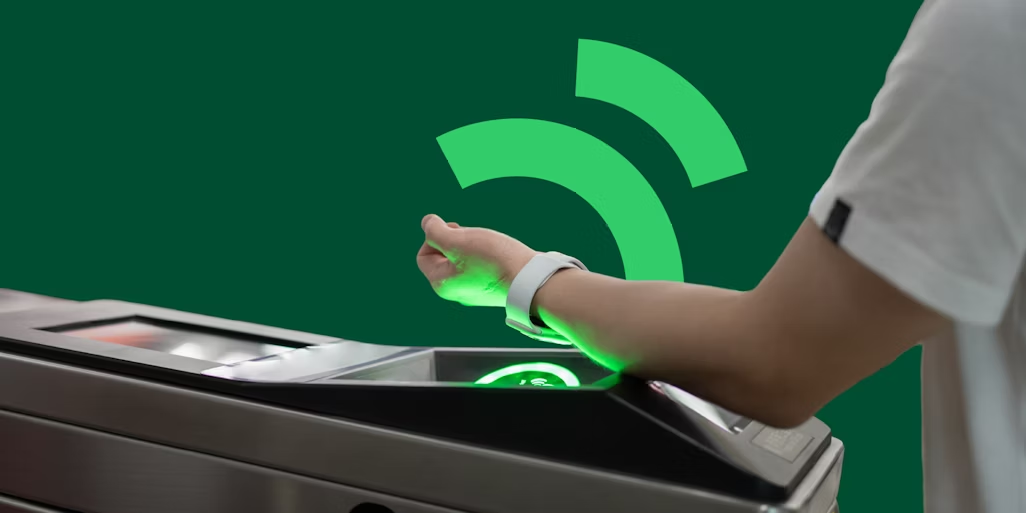
The pandemic accelerated contactless payment adoption by at least five years. What was once a niche feature at trendy coffee shops became the default at grocery stores, gas stations, and restaurants across Canada. Now that same contactless revolution is reaching online casinos — and I believe it’s going to transform how players manage their bankrolls.
From Physical Taps to Digital Deposits
There’s an important distinction between contactless payments at physical terminals and online casino deposits. At a store, you tap your phone or card on an NFC reader. Online, “contactless” means something different — it refers to biometric-authenticated mobile wallet payments that eliminate the need to manually enter card details.
Google Pay is leading this shift in the Canadian casino market. When you deposit using Google Pay on your phone or browser, you’re using the same security infrastructure (tokenization, biometric authentication) that powers in-store contactless payments. The experience feels similarly frictionless.
I’ve been tracking casinos that accept Google Pay for the past two years, and the growth pattern mirrors what happened with contactless retail payments: slow initial adoption, followed by rapid acceleration once players experience the convenience.
Why Traditional Casino Deposits Feel Outdated
Let me paint a picture of the traditional online casino deposit flow:
- Navigate to the cashier page
- Select “Credit Card” from the dropdown
- Type your 16-digit card number
- Enter expiration date and CVV
- Enter billing name and address
- Submit and wait for bank authorization
- Receive confirmation (or a frustrating decline)
That’s seven steps, requiring you to either memorize your card details or dig out your physical wallet. On mobile, it’s worse — small screens make data entry error-prone, and auto-fill doesn’t always work with casino payment forms.
Now compare the Google Pay flow:
- Tap the Google Pay button
- Confirm with fingerprint
- Done
Two steps. Under ten seconds. No card numbers transmitted, no billing addresses typed, no CVV codes to remember.
When I put these experiences side by side during my reviews, it’s obvious why players who try mobile wallet deposits rarely go back to manual card entry.
The Security Architecture Behind the Convenience
Convenience without security is reckless. Fortunately, mobile wallet casino deposits are actually more secure than traditional card payments, not less.
Here’s why: Google Pay uses a technology called Host Card Emulation (HCE) combined with tokenization. When you add your Visa or Mastercard to Google Pay, Google creates a virtual card number — a token — that represents your real card. This token is what gets transmitted during transactions.
Even if a casino’s payment processor were compromised, attackers would only access these one-time tokens, which can’t be used to make additional charges. Your actual card number, stored on Google’s servers, remains protected by Google’s enterprise-grade security.
Additionally, every Google Pay transaction requires device-level authentication — fingerprint, face recognition, or PIN. This means even if someone physically steals your phone, they can’t make deposits without your biometric data.
For gambling specifically, this dual protection (tokenized card + biometric authentication) addresses the two biggest security concerns players have: financial data theft and unauthorized account access.
Market Data: Who’s Using Mobile Wallets at Casinos?
Based on my observations across multiple Canadian casino platforms, mobile wallet adoption follows clear demographic patterns.
Players aged 25-40 adopt Google Pay at nearly triple the rate of players over 50. Urban players adopt faster than rural players, likely reflecting both smartphone sophistication and existing contactless payment habits.
Interestingly, mobile wallet users tend to be more engaged players overall. They deposit more frequently (likely because the friction is lower), but their average deposit amounts are slightly lower than credit card users. The pattern suggests that mobile wallets encourage regular, measured play rather than infrequent large deposits — a pattern that responsible gambling advocates would applaud.
Challenges Facing Broader Adoption
Despite the clear advantages, several factors are slowing mobile wallet adoption at online casinos.
Operator integration costs. Smaller casino operators face significant development costs to integrate Google Pay. The API implementation, testing, and ongoing maintenance require technical resources that some operators lack.
Withdrawal limitations. As I mentioned, most casinos that accept Google Pay for deposits don’t support it for withdrawals. This creates an asymmetric experience that can frustrate players who expect the same convenience when cashing out.
Banking restrictions. Google Pay processes transactions through your underlying card. If your Canadian bank blocks gambling transactions on that card, Google Pay can’t help. It’s a pass-through service, not a workaround for banking policies.
Player awareness. Many players simply don’t know that their preferred casino accepts Google Pay. Casinos could do a better job promoting this option, particularly on mobile versions of their sites.
Looking Forward
The contactless payment revolution in online gambling is inevitable. The technology is proven, the security is superior, and the user experience is dramatically better than legacy payment methods.
For Canadian players, my recommendation is practical: check whether your current casino supports Google Pay. If it does, make one test deposit. The experience will speak for itself. If it doesn’t, that’s worth noting when you’re evaluating where to play — payment innovation often signals broader operator quality.
I write regularly about casino payment technology and trends at Zavian Thornell. If this topic interests you, I’ve published detailed comparisons of every major payment method available to Canadian players.
Zavian Thornell is an iGaming writer with a BA in Journalism from UNLV. Since 2015, he has specialized in reviewing casino payment methods, security protocols, and player experience across the Canadian market.